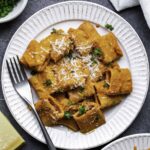
BEST Gochujang Pasta
This Gochujang Pasta is creamy, spicy, and SO saucy! It's made with 8 ingredients and is ready in 20 minutes! Perfect for a weeknight dinner!
Servings: 4
Calories: 548kcal
Equipment
- A large pot
Ingredients
- 1 lb (250g) pasta of choice (I use large rigatoni; use gluten-free if needed)
- ½ cup pasta water
- 1 teaspoon olive oil plus more for coating the pasta
- 2 tablespoon butter (use olive oil or vegan butter if needed)
- 4-6 garlic cloves, minced
- 2 tablespoon gochujang (add 3 tablespoon if you like it really spicy)
- 1 cup heavy cream (or vegan cream or full-fat coconut milk from a can)
- ¼ teaspoon salt
- ¼ teaspoon smoked paprika (optional)
- ¼ cup freshly grated parmesan, and more for serving (use vegan parm if needed)
- Freshly cracked black pepper, to taste
Instructions
- Fill a large pot with water and season with salt. Once it comes to a boil, add the pasta, stir and cook for 1 minute shy from what the packaging says, until al dente.1 lb (250g) pasta of choice
- When ready, reserve the pasta water, and drain the rest. Add the pasta to a bowl and toss with a drizzle of olive oil to prevent it from sticking. Set aside.
- In the same pot, melt the butter over medium heat. Once it starts to sizzle, add the minced garlic and cook for 30 seconds to 1 minute, stirring very often, or until fragrant. Add gochujang paste and stir. Toast the paste for 1-2 minutes, or until it darkens in color and caramelizes a little bit.1 teaspoon olive oil, 2 tablespoon butter, 4-6 garlic cloves, minced, 2 tablespoon gochujang
- Then, add the heavy cream and half of the reserved pasta water. Stir until the sauce is creamy and smooth. Season with a pinch of salt and black pepper, and smoked paprika (if using) and bring to a gentle simmer.½ cup pasta water, 1 cup heavy cream, ¼ teaspoon salt, ¼ teaspoon smoked paprika, Freshly cracked black pepper, to taste
- Add the cooked pasta to the creamy sauce, alongside the grated parmesan cheese. Turn the heat to low and cook until the sauce has thickened and the pasta is well coated, stirring often.¼ cup freshly grated parmesan, and more for serving
- Remove from the heat and give it a taste test. Add more salt or black pepper if needed, or more pasta water if you need to thin out the sauce.
- Serve immediately with more parmesan cheese on top and a few sprinkles of fresh parsley (optional).
Notes
- Use high-quality pasta. Bronze-but pasta releases more starch into the pasta water and later absorbs more of the sauce. You also want to choose a pasta type with a rough exterior so the sauce can stick to it. In general, the better your pasta, the better the final dish.
- Cook the pasta until al dente. The pasta will continue to cook when it gets tossed with the sauce, so set a timer for 1 minute less than the time on the package instructions.
- Save some of the pasta water. Have you ever wondered how the sauces in Italian restaurants are so smooth and creamy and stick to the pasta? Well, pasta water is the secret. Because it has starch from cooking the noodles, it makes the sauce super creamy and coats the pasta very well.
- Toast the gochujang paste. Toasting the gochujang paste in oil or butter caramelizes it, and gives it a nutty flavor. This is an essential step to add flavor and sweetness to the sauce.
- Fridge: Let leftover gochujang pasta cool to room temperature. Then, transfer it to an airtight container and store it in the fridge. If the pasta and the sauce are stored separately, they can last for up to 6 days. If they have been mixed, they will keep for 3-4 days.
- Freezer: Let leftovers cool to room temperature, then transfer to an airtight container, and freeze for up to 3 months.
Nutrition
Serving: 1serving | Calories: 548kcal | Carbohydrates: 55.2g | Protein: 12.3g | Fat: 31.3g | Saturated Fat: 18.5g | Polyunsaturated Fat: 1.7g | Monounsaturated Fat: 8.4g | Trans Fat: 1g | Cholesterol: 87.8mg | Sodium: 456.2mg | Potassium: 220.9mg | Fiber: 2.5g | Sugar: 5.9g | Vitamin A: 309.5IU | Vitamin C: 1.3mg | Calcium: 112.9mg | Iron: 0.9mg