


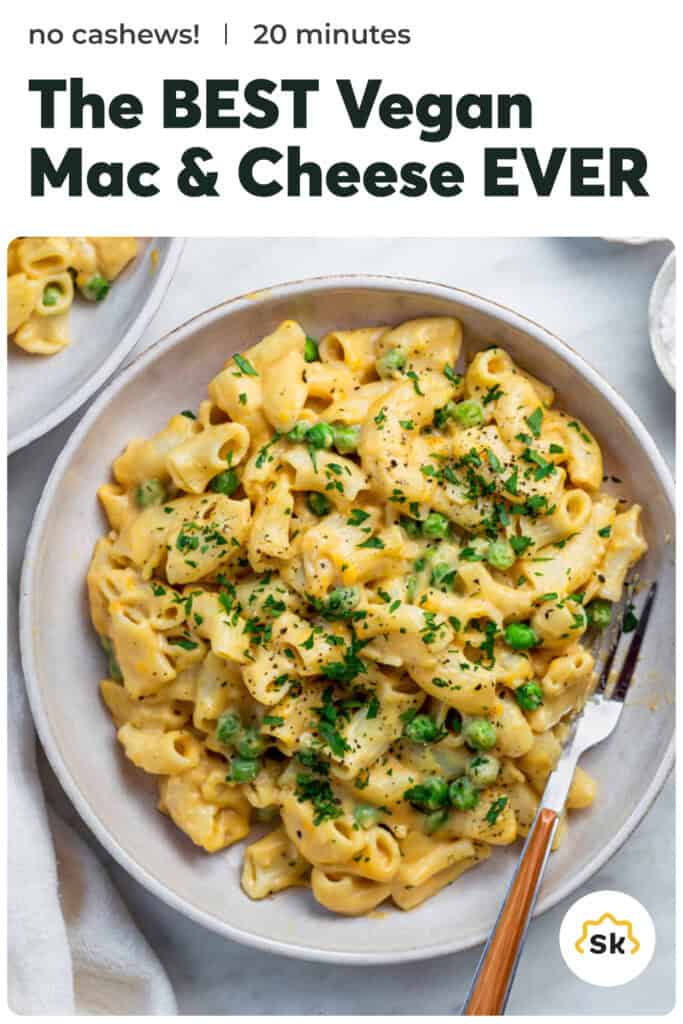
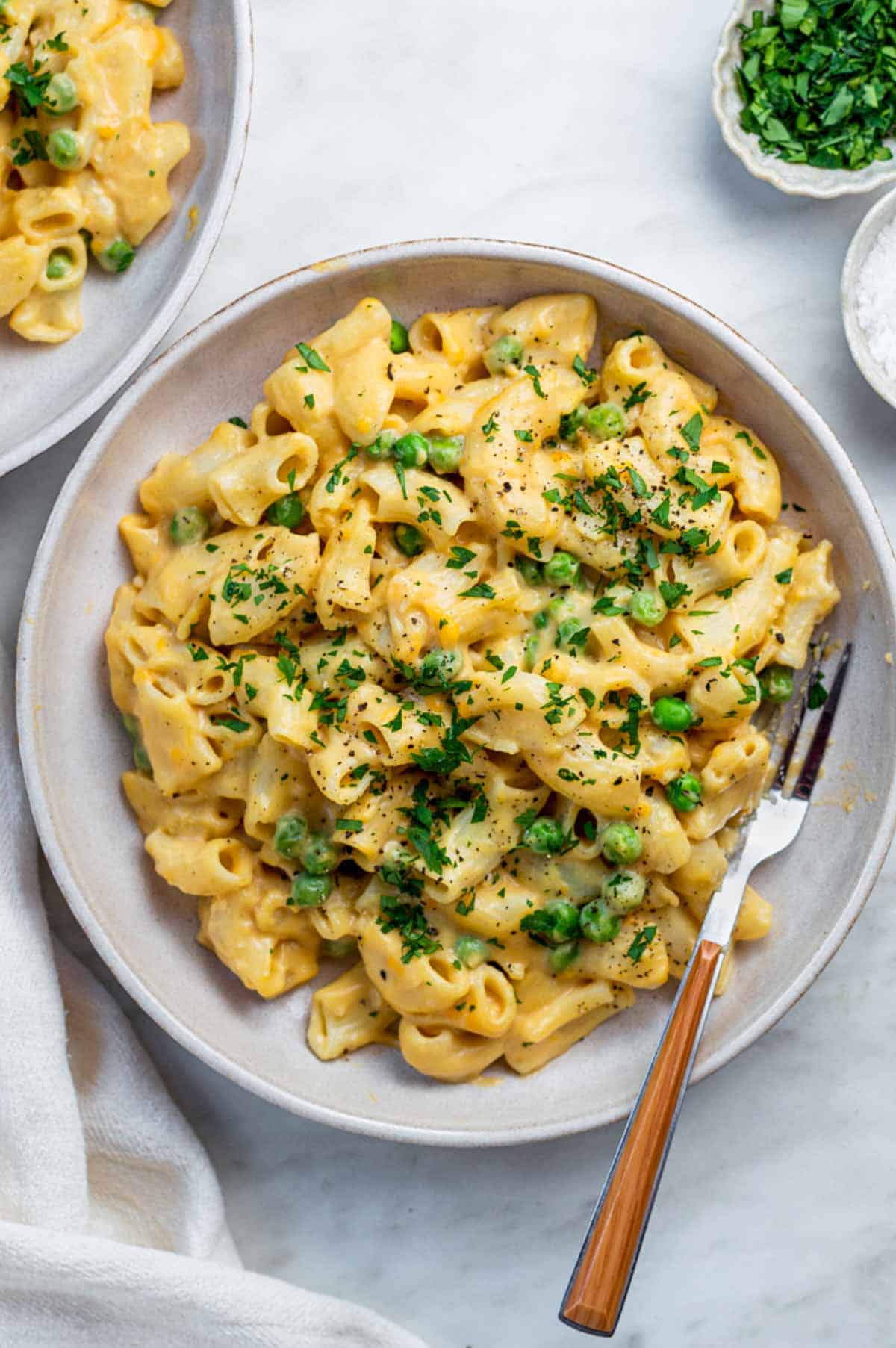
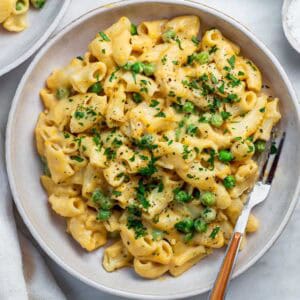
This Vegan Mac and Cheese Without Cashews is ultra creamy, perfectly cheesy, and ready in just 20 minutes. Made with a simple stovetop roux and melty vegan cheese (no soaking, no blender, no nuts), it delivers that classic comfort-food flavor with a smooth sauce that clings to every noodle.
👩🏼🍳 A Quick Look at this Recipe
- 🕒 Ready in: 20 minutes
- 👪 Serves: 4
- 🍽 Calories: 628
- 💪 Protein: 20 g
- 🔥 Cooking Method: Stovetop
- 📖 Dietary Info: Vegan, Nut-free, Gluten-free option
- ⭐ Difficulty: Easy
- ❤️ Why You'll Love It: The sauce is velvety, gooey, and perfectly cheesy, all without any cashews! You get all the classic comfort in just 20 minutes, no soaking or blender required.
SUMMARIZE & SAVE THIS RECIPE ON:
Out of all the vegan mac and cheese recipes I've tried over the years (and trust me, they've been a lot), I can confidently say that this is the best one I've ever had! Dare I say, it's even better than classic dairy mac and cheese.
It feels so indulgent, creamy, and rich that you really can't compare it to the ones out there made with potatoes and cashews. Instead of coating the pasta in thin veggie soup, mine has a silky cheese sauce that's buttery and packed with flavor.
To achieve that, I'm using plenty of freshly shredded cheese, butter, flour, and milk (all vegan, of course). Hey, I didn't say it was healthy, but it is so damn good!
Once you try this vegan mac and cheese without cashews, it will become your go-to recipe, I'm sure!
For more cheesy vegan recipes, check out my creamy tofu alfredo and this cheesy vegan pasta bake.
Why This Recipe Works
- The Roux Makes a Creamy Stable Base: Vegan butter and flour create a thick, structured base that keeps the sauce smooth and clingy instead of watery.
- Acid & Mustard For Sharper Flavor: A splash of lemon juice and Dijon adds brightness and mimics the tangy bite of real cheddar.
- Nutritional Yeast for Cheesy Depth: It brings a savory, umami flavor that makes the sauce taste richer and more "cheddar-like."
- The Right Vegan Cheese Matters: Freshly grated block-style cheese often melts more smoothly than pre-shredded, and gentle heat prevents splitting or graininess.
Ingredients & Substitutions
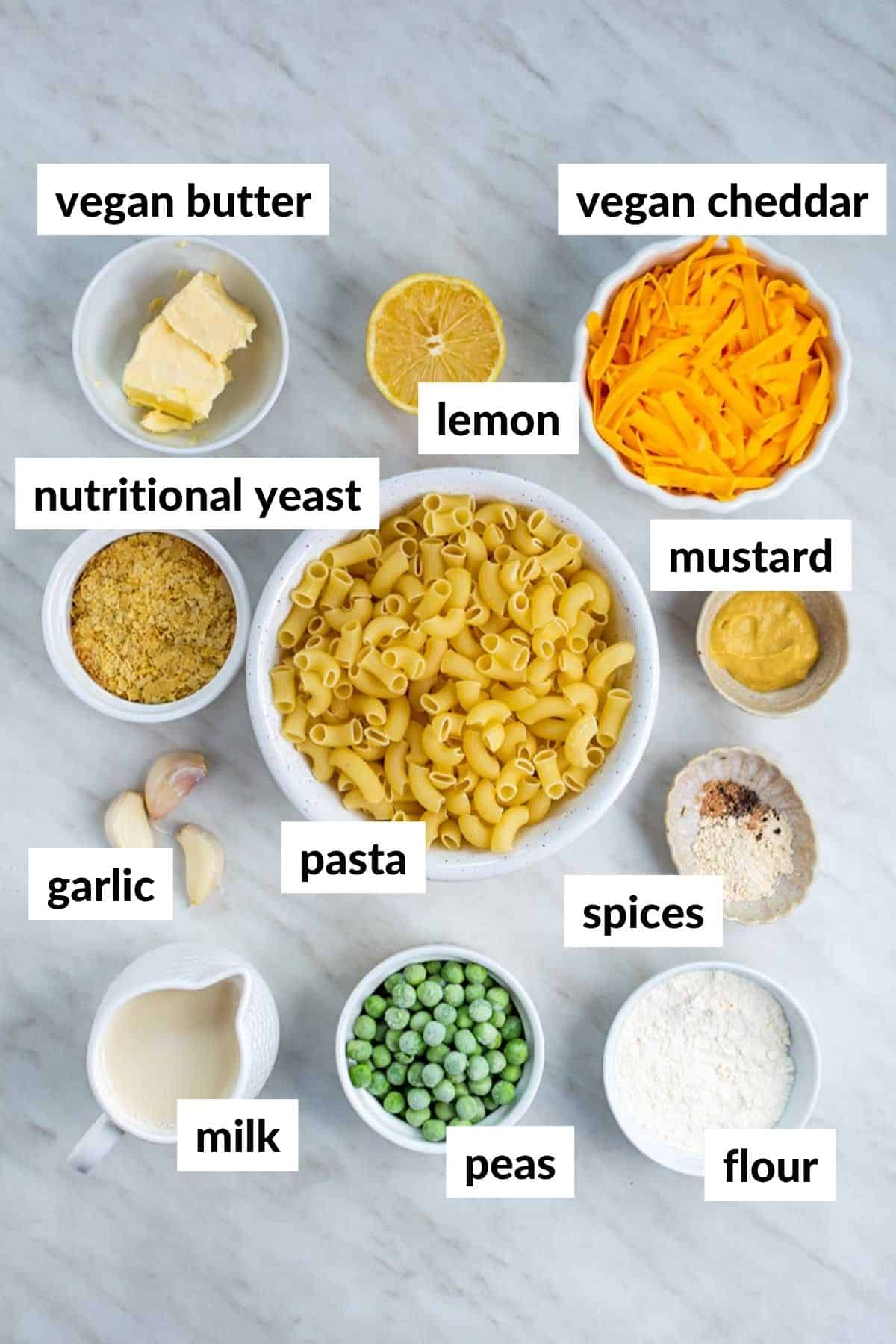
- Elbow macaroni. While macaroni is the classic and what I use here, my personal favorite for mac and cheese is cavatappi. But any small-shaped pasta works great, and you can even use gluten-free pasta if needed.
- Vegan butter. Adds rich, buttery flavor to the sauce. Vegan butter and margarine are essentially the same thing, so any margarine without animal products will work to add that classic, savory depth you expect in traditional mac and cheese.
- Vegan cheddar. You can use any vegan cheese you like that melts well. I like and recommend Violife's Cheddar Block. For best results, buy a block of cheese and shred it yourself. Pre-shredded cheese is coated with starch or flour and doesn't melt properly.
- Flour. You can use any kind of flour you like, including white flour, gluten-free all-purpose, or rice flour.
- Non-dairy milk. I use soy milk because it's creamy and has a neutral flavor, but a thick almond milk, oat milk, or even coconut milk will work. Just make sure to use unsweetened and unflavored.
- Nutritional yeast. It can be found at most big food stores or at a health food store. It gives a cheesy flavor to the sauce. If you need a substitute, I recommend using 1-2 tablespoons of white miso paste. It will give it a savory and umami flavor.
- Frozen peas. I like to add them so I can sneak in some veggies and fiber, but they're totally optional.
See the recipe card below for exact measurements.
Dairy-Free Mac and Cheese Variations
- Spicy mac and cheese: If you're into spicy flavors, you can add 1-2 tablespoons of gochujang paste, similar to my creamy gochujang pasta. A couple of teaspoons of sriracha, or even ¼ teaspoon of cayenne pepper, will also work.
- Make it gluten-free: Use gluten-free pasta, as well as a gluten-free flour like rice flour or a gluten-free flour blend. You'll also need to make sure the rest of the ingredients don't contain gluten, such as if you're using oat milk, which can sometimes be contaminated with it.
- Make it smoky: Add a teaspoon of liquid smoke, smoked paprika, or a little BBQ sauce. You can also add some of my smoky marinated tofu or charred air fryer tempeh.
- Buffalo mac and cheese: Add ½ cup of buffalo sauce at the end of cooking, just before taking the mac and cheese off the heat.
- Swap the veggies: You can also add spinach, broccoli, red bell peppers, or any vegetable you like, in addition to or in place of the peas.
- Add protein: Toss in 2 blocks of crispy fried tofu to boost the protein of this dish.
How to Make Vegan Mac and Cheese Without Cashews
The base for this recipe is a dairy-free bechamel, which starts with a roux.
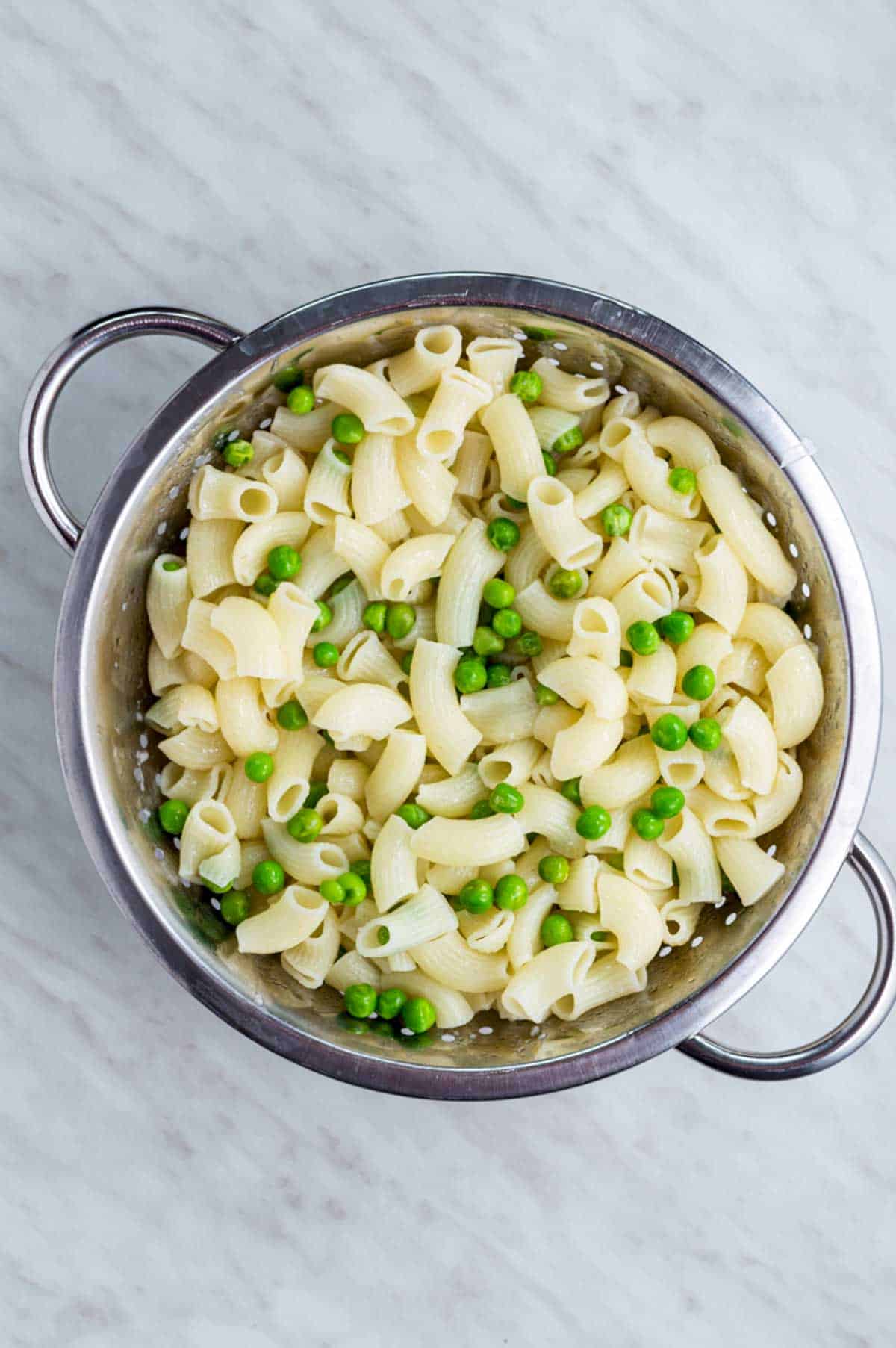
Step 1: Cook the Pasta and Peas. Add the pasta to a large pot of boiling water with a teaspoon of sea salt, and cook until al dente, using the package instructions. Add the frozen peas in the last 2-3 minutes. When the pasta is ready, drain it well and then toss it with olive oil to prevent it from sticking.
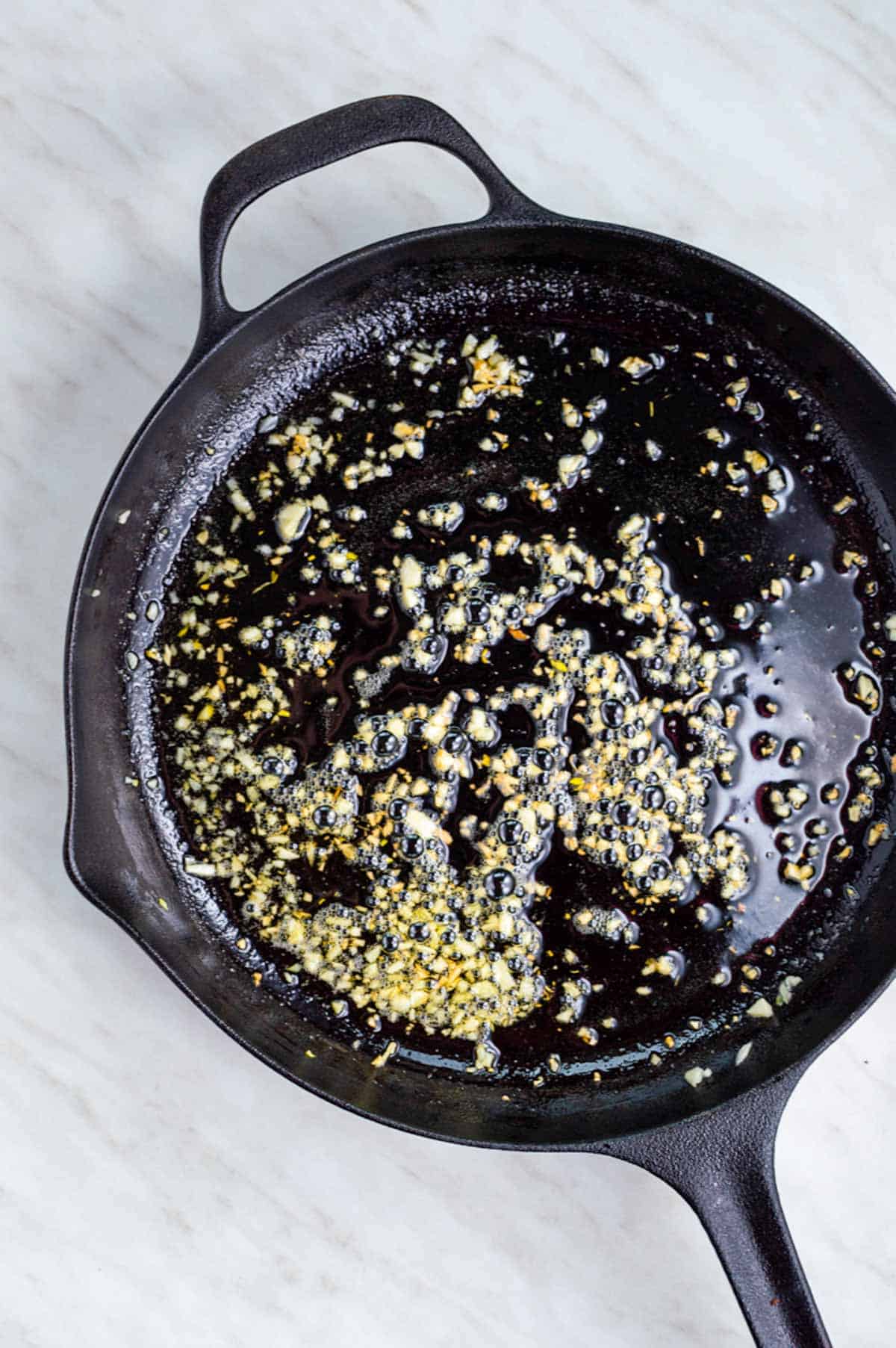
Step 2: Cook the Garlic. Melt the butter in a cast-iron skillet or a rimmed pan over medium heat. Then, add minced garlic and cook for 2 minutes, or until lightly golden brown.
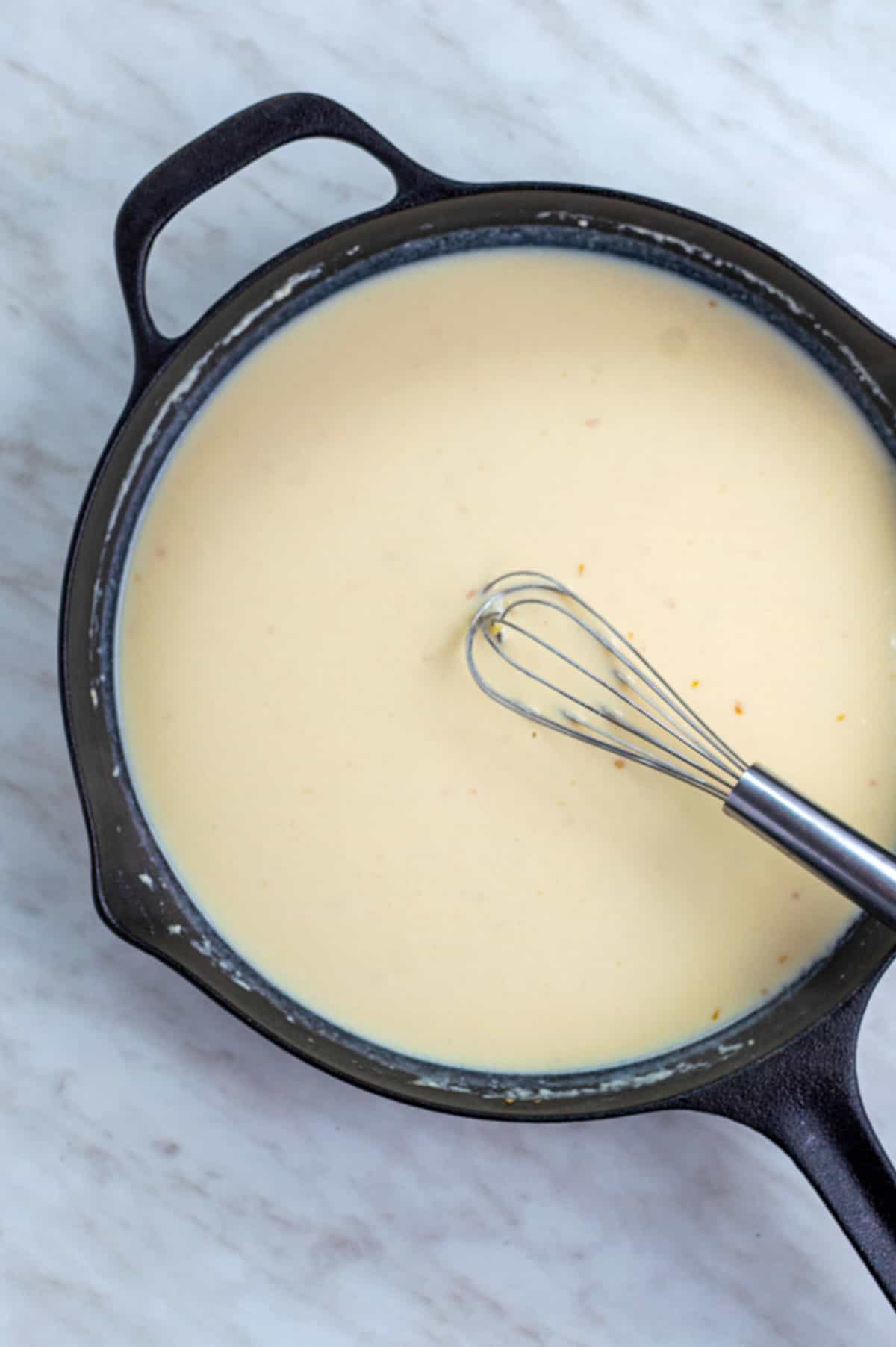
Step 3: Make the Roux. Turn the heat to low and add the flour. Use a whisk to mix until a paste is formed. Slowly pour the plant-based milk into the skillet, while whisking constantly to prevent clumps. Add the Dijon mustard and spices, and stir.
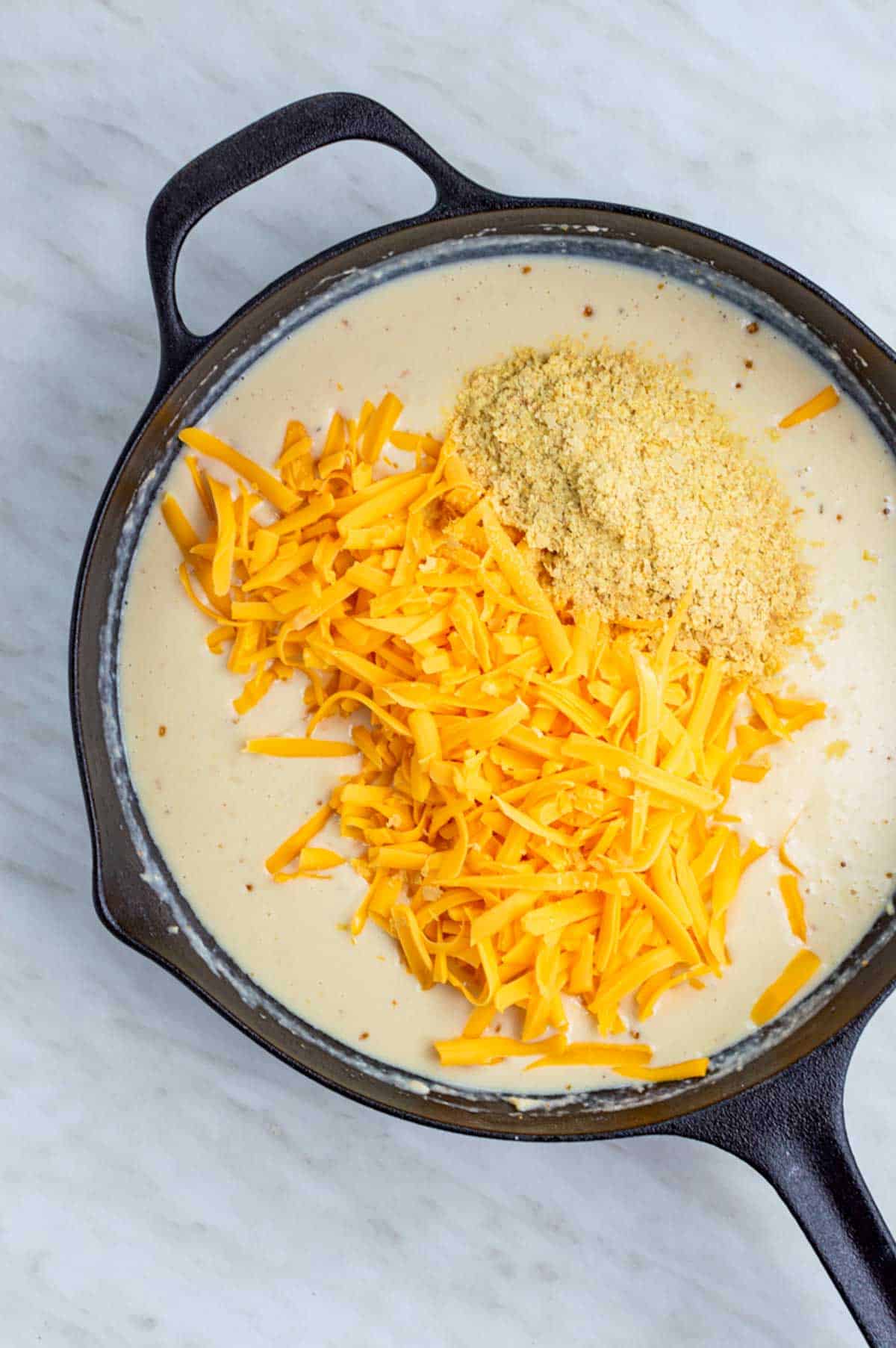
Step 4: Add the Cheese. Add the lemon juice, nutritional yeast, and shredded cheese to the skillet.
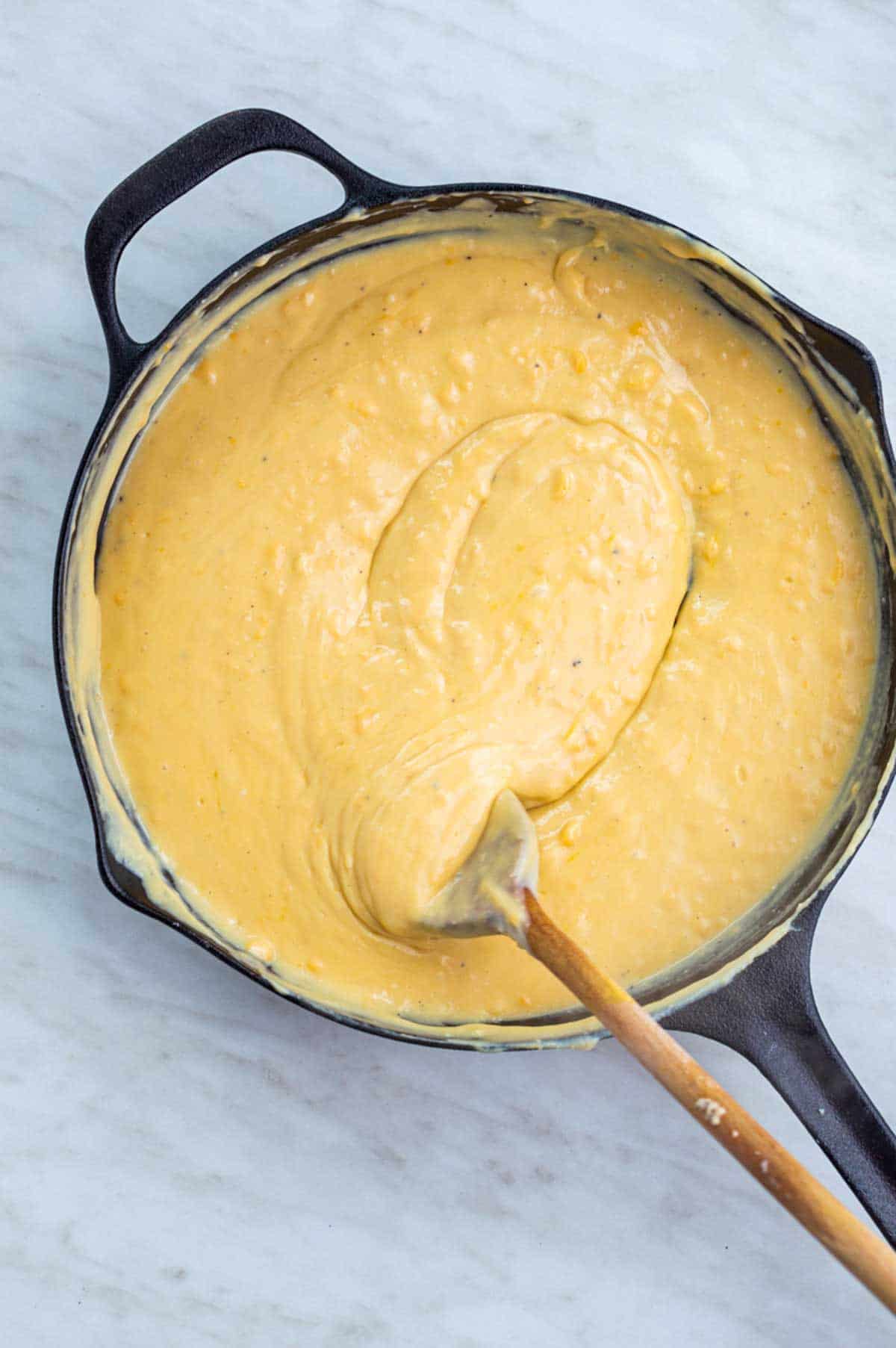
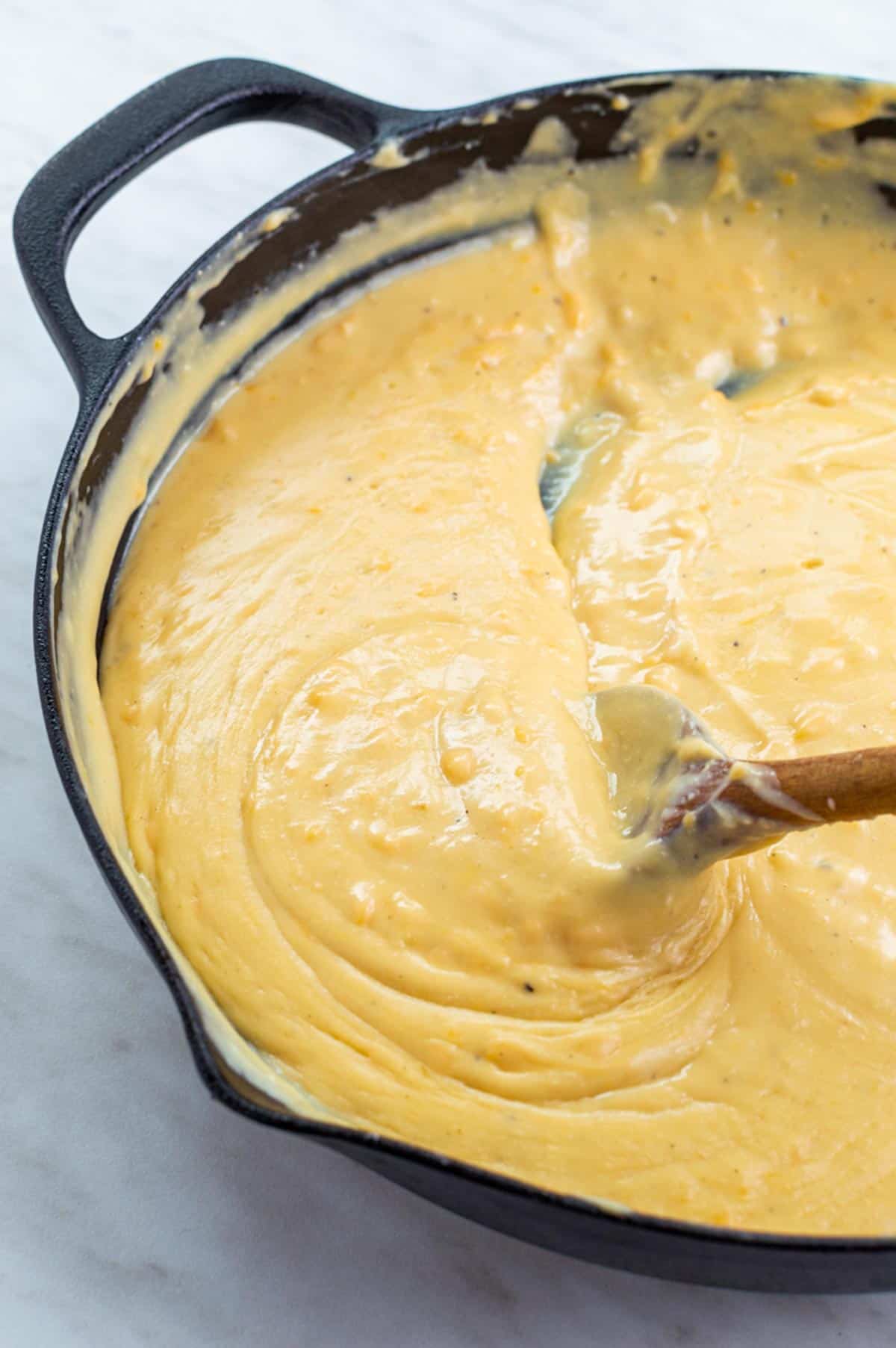
Step 5: Finish the Vegan Mac and Cheese Sauce. Stir and cook for 3-4 minutes or until the cheese fully melts.
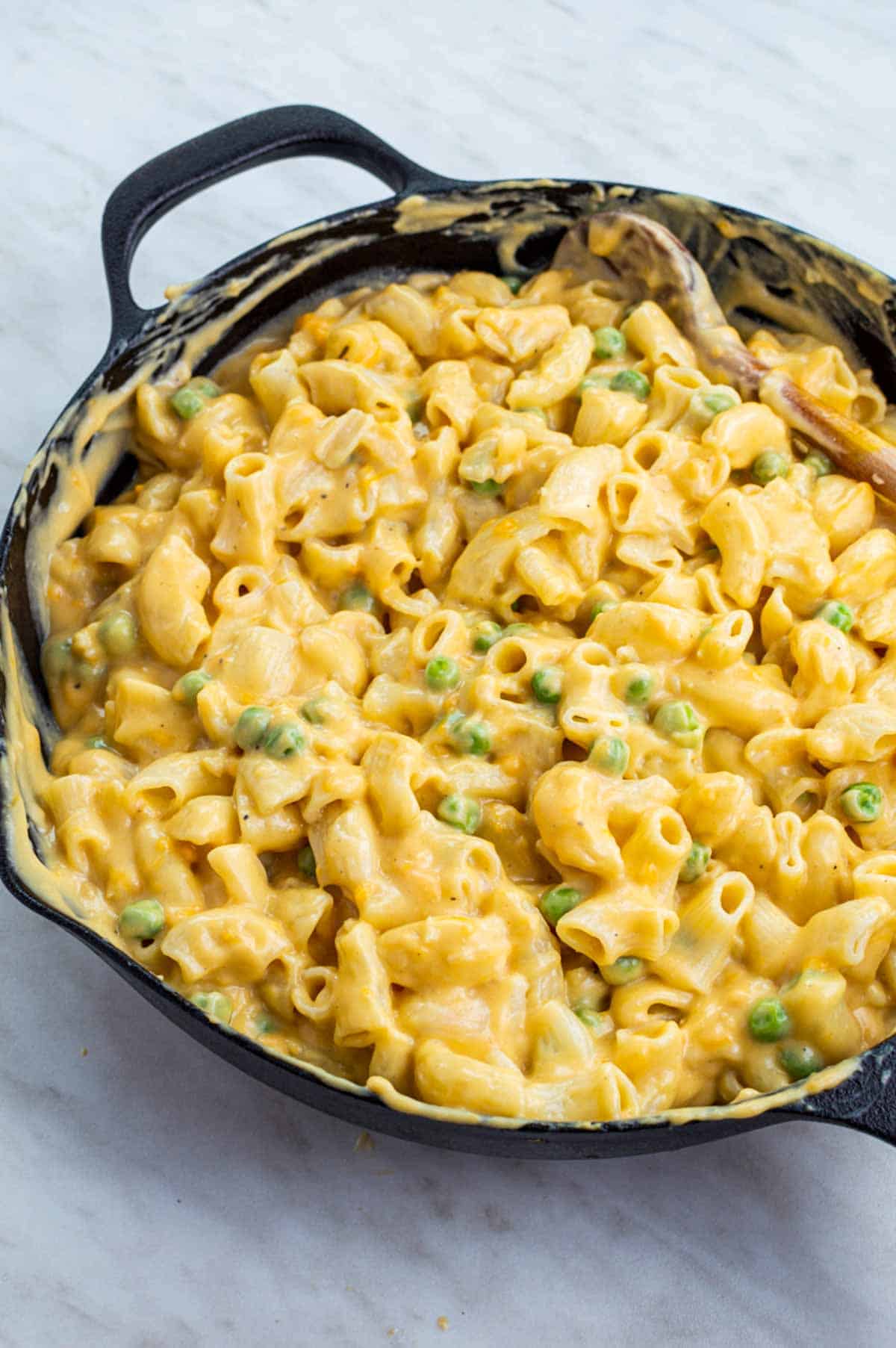
Step 6: Add Pasta and Peas. Add the cooked pasta and peas to the skillet, and toss until everything is well coated with the cheese sauce. Serve!
👩🏼🍳 Petra's Tips
- Make the roux on low heat: Cooking the butter and flour gently prevents scorching, which can create a bitter flavor and dark color. Once a roux burns, the taste carries through the entire sauce and can't be fixed. Keep the heat moderate and stir constantly for a smooth, creamy base.
- When adding the milk, whisk constantly. This will ensure that no big clumps of flour will remain and that the cheese sauce will turn out smooth and creamy!
- Cook the sauce until the cheese fully melts. Vegan cheese takes longer to melt than dairy cheese, so you'll need to keep cooking and stirring the sauce for 3-4 minutes for the shreds to melt.
- Remove from heat immediately. Cook it just enough so that the cheese melts, and then remove it from the heat. The more you cook it, the more it thickens, which can lead to dry mac and cheese.
- Adjust the sauce. If you find the sauce too thick, add more milk, 1 tablespoon at a time, to reach the desired consistency. If it's too thin, simmer 2-3 minutes longer to allow some evaporation or add a pinch more cheese or nutritional yeast.
Recipe FAQs
Yes! You can make the cheese sauce 5 days in advance and reheat it on the stove with a few splashes of milk before using it.
Yes, you can make mac and cheese with any plant milk you like! I've found that soy milk works best because it's rich and creamy, whereas almond milk can make the cheese sauce thinner. Whatever milk you choose, just make sure that it's unsweetened and unflavored!
Yes! Use a cast-iron skillet for a one-pot option or transfer to a greased baking dish after cooking on the stove. Top the mac and cheese with breadcrumbs and a sprinkle of nutritional yeast, and spray the top with cooking spray to help with browning. Broil for 3-4 minutes, or until golden brown, or bake for 15-20 minutes at 350ºF (180ºC).
A grainy sauce usually means the heat was too high or the vegan cheese was added too quickly. High heat can cause the fats to separate from the starches, leading to a slightly gritty texture. Keep the heat moderate, add the cheese gradually, and stir continuously until just melted.
If the flavor feels flat, try adding more nutritional yeast, a small pinch of salt, and a touch of Dijon mustard. These ingredients boost umami and sharpness, helping recreate that classic cheddar-style flavor.
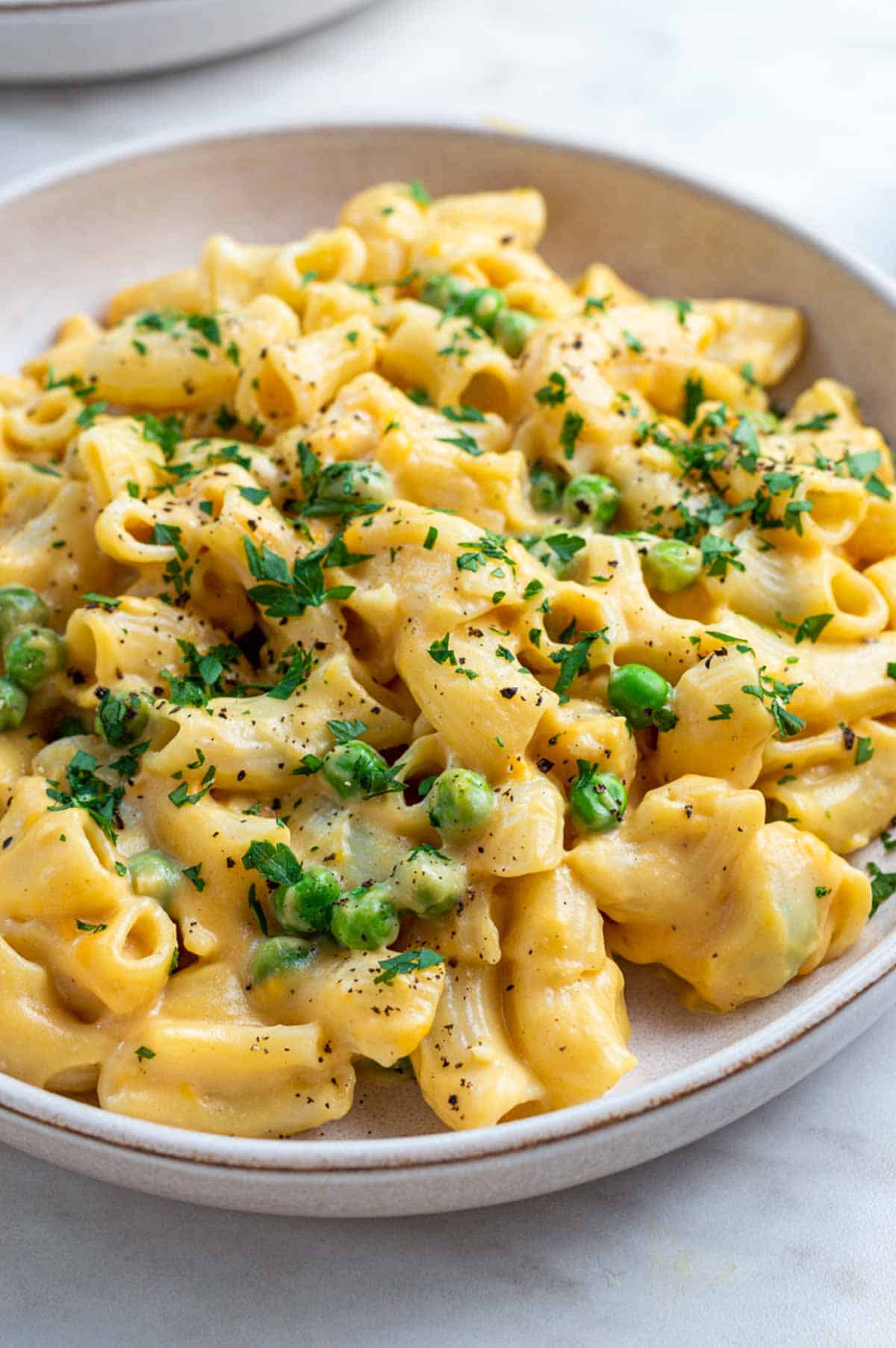
Serving Suggestions
This vegan mac and cheese without cashews is great to serve alongside garlic parmesan bread, roasted veggies such as roasted balsamic Brussels sprouts or broccoli, or a fresh salad like this arugula, beet, and feta salad.
To make it a complete meal, serve it next to a protein-packed main like my crispy vegan cordon bleu or these fried tofu nuggets.
Storing and Reheating
- Storing: Let leftovers cool to room temperature. Then, transfer the mac and cheese to an airtight container and cover it with a lid. Save in the fridge for up to 5 days. You can also freeze this recipe for up to 3 months in a freezer-safe container. Make sure to let it thaw overnight before reheating.
- Reheating: Reheat it on the stovetop for best results. Add a splash of water or plant milk and warm over medium heat for about 5 minutes, stirring until creamy. For a quicker option, microwave for 1-3 minutes, stirring halfway through. To reheat a larger portion, cover with foil and bake at 350°F (180°C) for about 10 minutes, or until warmed through.
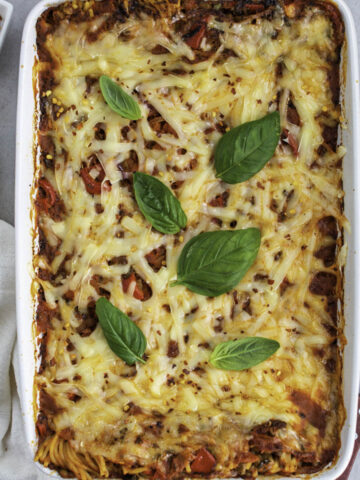
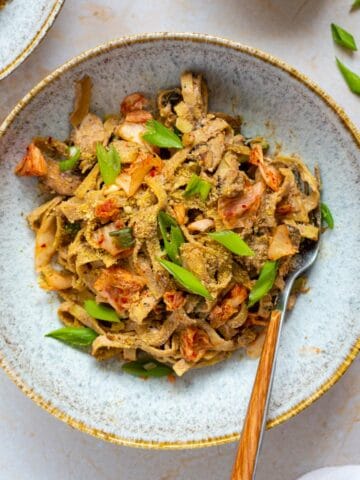
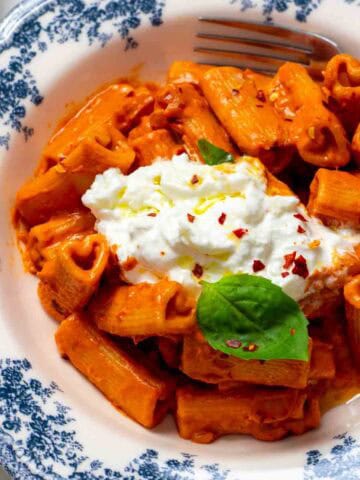
More Vegan Comfort Food Recipes
If you tried this Vegan Mac and Cheese with No Cashews or any other recipe on my website, please leave a 🌟 star rating and let me know how it goes in the 📝 comments below. Thanks for visiting today!
📖 Recipe
Vegan Mac and Cheese without Cashews Recipe
Equipment
- Stovetop
Ingredients
- 8 oz elbow macaroni (gluten-free if needed)
- 1 teaspoon olive oil for tossing the pasta
- 1 cup frozen peas (optional)
- 3 tablespoon vegan butter/margarine
- 3 cloves of garlic, minced
- 4 tablespoon all-purpose flour (or sub gluten-free all-purpose or white rice flour)
- 2 ½ cups non-dairy milk, unsweetened (I use soy milk)
- 1 teaspoon Dijon mustard
- ½ teaspoon garlic powder
- ¼ teaspoon ground nutmeg (optional)
- ½ teaspoon salt, or more to taste
- Freshly cracked black pepper
- Juice of ½ lemon, or more to taste
- 3-4 tablespoon nutritional yeast (or more if desired)
- 2 cups shredded vegan cheddar cheese (I use VioLife cheddar block)
Instructions
Boil pasta
- Fill a large pot with water and salt generously. Cook pasta according to packaging instructions, until al dente. Add the frozen peas in the last 2-3 minutes. Drain well, and drizzle 1-2 tablespoon olive oil to prevent sticking. Set aside.8 oz elbow macaroni, 1 cup frozen peas
Make cheese sauce
- To the same pot, or to a rimmed skillet, melt vegan butter over medium-low heat. Add minced garlic and cook for 2 minutes, stirring often, until lightly golden.3 tablespoon vegan butter/margarine, 3 cloves of garlic, minced
- Sprinkle the flour, whisking until a paste has formed. Slowly start pouring the milk, whisking constantly to prevent clumps, until creamy.4 tablespoon all-purpose flour, 2 ½ cups non-dairy milk, unsweetened
- Stir in the Dijon mustard, garlic powder, nutmeg (optional), salt, black pepper, and lemon juice.1 teaspoon Dijon mustard, ½ teaspoon garlic powder, ¼ teaspoon ground nutmeg, ½ teaspoon salt, or more to taste, Freshly cracked black pepper, Juice of ½ lemon, or more to taste
- Add nutritional yeast and shredded vegan cheese and mix. Cook for 3-2 minutes or until the cheese has fully melted. Add a splash of milk or water if the cheese sauce is getting too thick. Once ready, remove from the heat.3-4 tablespoon nutritional yeast, 2 cups shredded vegan cheddar cheese
- Add the cooked pasta and peas, and using a spatula, carefully toss until everything is well coated. Taste and adjust the flavor if needed, adding more salt for saltiness, lemon juice for tanginess, or black pepper to taste. Serve!
Notes
- Make the roux on low heat: The roux can darken and turn bitter very fast if the heat is too high, which will pretty much ruin the cheese sauce.
- Whisk constantly when adding the milk: This prevents lumps and ensures a smooth, creamy sauce.
- Cook until the cheese fully melts: Vegan cheese takes longer to melt - keep stirring for 3-4 minutes until the shreds are fully melted.
- Remove from heat immediately: Overcooking thickens the sauce and leads to dry mac and cheese.
- Adjust the sauce consistency: Too thick? Add 1 tablespoon of milk at a time. Too thin? Simmer 2-3 minutes longer or add a pinch more cheese or nutritional yeast.
- Let leftovers cool to room temperature. Transfer to an airtight container and store in the fridge for up to 5 days. You can also freeze this recipe for up to 3 months in a freezer-safe container. Make sure to let it thaw overnight before reheating.
Nutrition
Nutrition information is a rough estimate calculated with third-party calculations without including the optional ingredients.


Nina Overton says
Can you use almond milk in lieu of soy milk?
Petranka says
Yes 🙂
Jenny says
Delicious! Saved some extra sauce for other recipes 🙂
Petranka says
So happy you enjoyed this recipe, Jenny!
Sarah says
This was the creamiest vegan Mac and cheese I have ever had! The kids loved it too!
Petranka says
Amazing! Thanks for sharing, Sarah!